Office Strip-Out and Reinstatement: What Actually Happens
May 5, 2026
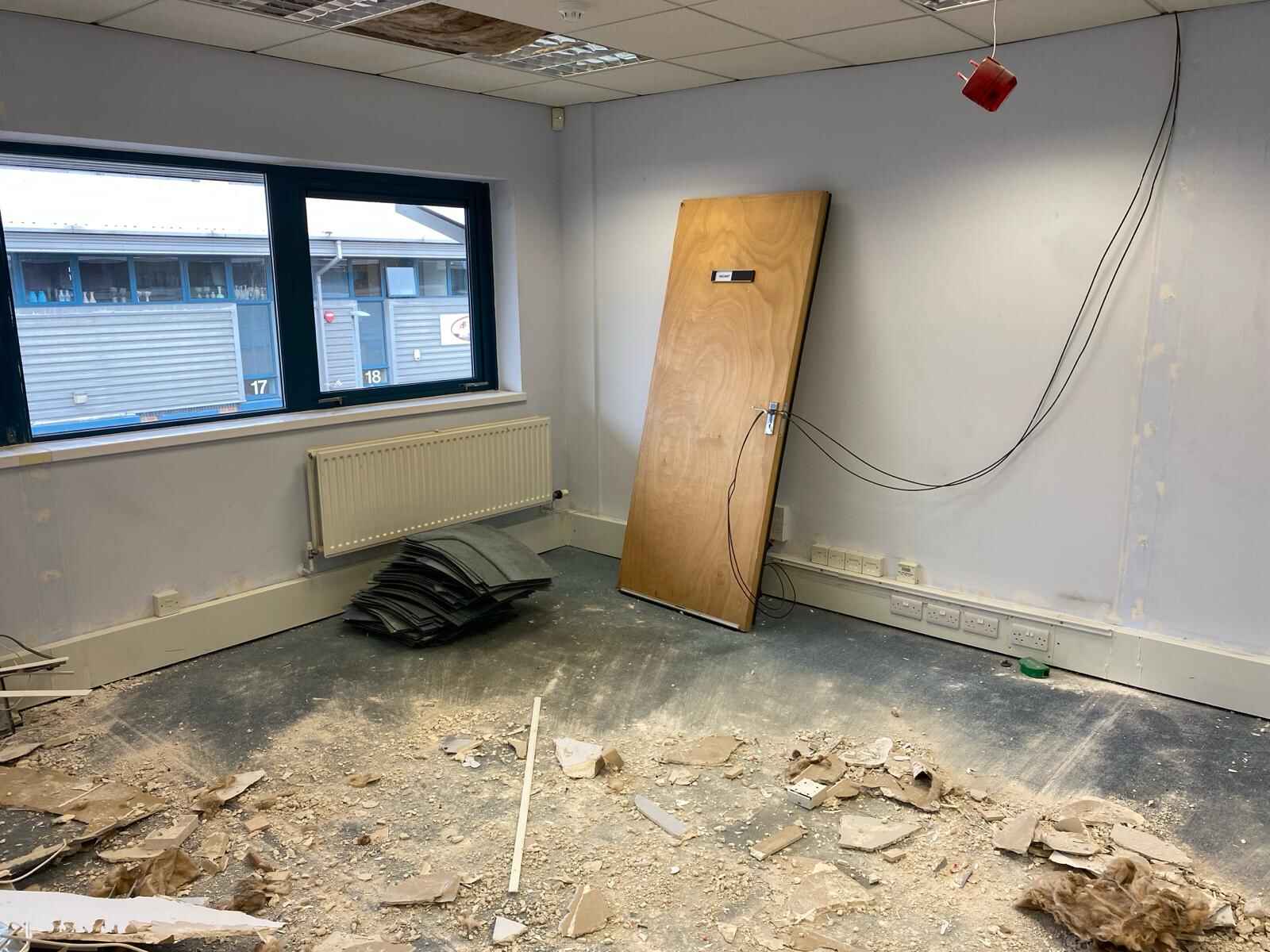
When your lease ends, most tenants think about the bill before the work. That's understandable. But understanding what the job actually involves — and in what order — helps you plan it properly, avoid last-minute surprises, and choose the right contractor.
Here's exactly what an office strip-out and reinstatement involves, from first visit to final handover.
Step 1: Site Survey
Before anything is touched, we inspect the property.
We're looking at what's there now versus what the lease says should be there at handover. That includes:
- Every partition wall, meeting room, and glazed screen installed by the tenant
- Suspended ceiling condition — missing tiles, damaged grid, penetrations that were never made good
- Flooring — type, condition, whether it needs replacing or just cleaning
- Electrical — what the tenant added, what's original, what the test certificates cover
- Mechanical — air conditioning units, fan coils, extract ventilation, anything serviced or not
- Joinery — kitchens, reception counters, built-in storage
- Decoration — walls, ceilings, doors, skirting
This survey drives the programme and the quote. Without it, you're guessing.
Step 2: Programme Planning
A typical office reinstatement isn't one trade doing one thing. It's multiple trades working in sequence, and the sequence matters.
Get it wrong and you're paying for the same ceiling twice — once to strip it for the electricians, and again to reinstate it after.
The usual order:
- Soft strip (see below)
- Partition and structural alterations
- Mechanical and electrical works
- Ceiling reinstatement
- Flooring
- Decoration
- Joinery and making good
- Deep clean
- Final inspection
Trades work around each other. That's what a principal contractor manages — you shouldn't have to.
Step 3: Soft Strip
This is where the physical work starts.
Soft strip means removing everything that isn't part of the base build — all the fixtures, fittings, and tenant-installed items that need to go before any reinstatement can happen.
This typically includes:
- Partition walls and glazed screens
- Kitchen units, appliances, and worktops
- Reception desks and feature joinery
- Data cabling and trunking
- Tenant-installed lighting
- Ceiling tiles and grid where works are required above
- Raised access floor panels where relevant
- Signage and branding
It sounds straightforward. It rarely is. Cable routes run through fire-rated walls. Partitions are tied into the structure. Ceiling grids are interconnected across large open areas. An experienced team knows how to strip without creating more work downstream.
Waste is removed, separated, and disposed of correctly — including compliance with any asbestos surveys if the building is pre-2000.
Step 4: Partition Removal and Making Good
Once the soft strip is done, any partition walls not already taken out are removed.
After removal, the work is in the detail:
- Floors made good where partition tracks were fixed
- Ceilings patched and repaired where partitions met the grid
- Walls patched and skim coated where fixings were
- Fire stopping reinstated at any penetrations
Skipping the making good is the most common cause of a landlord dispute after handover. It's also the most visible. A landlord surveyor walking an empty floor will see every patch, every unfilled hole, every unpainted section of wall.
Step 5: Mechanical and Electrical Works
This is often where the biggest scope sits, especially in larger offices.
Electrical works typically include:
- Removing tenant-added lighting and reinstating original fittings
- Socket and switch alterations
- Distribution board changes
- Emergency lighting tests
- Fire alarm integration checks
- Electrical Installation Condition Reports (EICRs)
Mechanical works typically include:
- Air conditioning servicing (most leases require this at handover)
- Fan coil unit inspection
- Extract ventilation checks
- Heating system checks
- Pipework alterations made by the tenant
Building services are the area where tenants most often underestimate scope. "We barely changed the M&E" is common. But servicing and certification requirements exist regardless of whether you touched the systems.
Step 6: Ceiling Reinstatement
Ceilings take damage throughout a lease. Lighting changes, partition installations, service penetrations, data routes — all of these leave marks in the grid and tiles.
Reinstatement involves:
- Replacing damaged or stained tiles like-for-like
- Repairing or replacing damaged grid sections
- Reinstating lighting to the original layout
- Making good all penetrations — cable drops, old partition heads, service routes
- Ensuring fire stopping is correct at any ceiling voids
A patchy ceiling is another obvious red flag for a landlord survey. Tiles that don't match in colour or profile are easily spotted under the fluorescent light of an empty floor.
Step 7: Flooring
Lease obligations vary here — some require full replacement, others require the floor to be returned in good condition with cleaning accepted.
Most office floors involve one or more of:
- Carpet tile replacement (partially or fully)
- Vinyl replacement in kitchen, WC, or welfare areas
- Raised access floor tile checks and replacement
- Safety flooring in plant or utility areas
If the floor was down before your lease started and you haven't made it worse, a Schedule of Condition from day one protects you. Without one, the landlord's position is that you inherited it in good condition.
Step 8: Decoration
This is the final finish before handover — and it shows everything.
Typical decoration scope:
- Full repaint of all walls to a consistent colour and finish
- Ceilings painted where required
- Doors, frames, and architraves
- Skirting boards
- Any exposed steelwork or columns
Good decoration can make an average reinstatement look great. Poor decoration makes a solid reinstatement look unfinished. It's the last thing the surveyor sees, so it matters.
Most leases specify a standard — typically good quality emulsion throughout, with oil-based on doors and joinery. Read the lease before deciding what "good enough" looks like.
Step 9: Deep Clean
Before handover, the building should be professionally cleaned throughout.
This includes:
- All floors (carpet cleaning or hard floor treatment as applicable)
- Windows, internal glazing, and glass partitions
- Kitchen and welfare areas
- WCs and washrooms
- High-level dust removal
- Air conditioning grilles and diffusers
A deep clean isn't just about appearance — it's about demonstrating you've handed back the space in the condition the lease requires.
Step 10: Final Inspection and Handover
Before keys are returned, we walk the floor. Anything that doesn't meet standard gets sorted before the landlord's surveyor arrives — not after.
We check:
- Every room, cupboard, and riser
- All ceilings, walls, floors, and doors
- Lighting and emergency lighting operation
- M&E systems and certification
- Waste removed, no items left on site
- Keys, fobs, and documents ready for handover
Handing back a well-reinstated space doesn't guarantee you won't receive a Schedule of Dilapidations — some landlords serve one regardless. But it does give you the strongest possible position to challenge anything that's unreasonable.
How Long Does It Take?
It depends on size and scope, but rough guides:
| Office Size | Typical Programme |
|---|---|
| Under 2,000 sq ft | 1–2 weeks |
| 2,000–5,000 sq ft | 2–4 weeks |
| 5,000–10,000 sq ft | 4–8 weeks |
| 10,000+ sq ft | 8+ weeks |
These assume normal access. Restricted hours, out-of-hours working, or occupied buildings alongside extend the programme.
One Contractor vs. Multiple Trades
Some tenants coordinate their own strip-out by booking separate trades — a decorator, an electrician, a flooring firm. It's possible, but it has real risks:
- Trades working out of sequence means rework
- No single point of responsibility if something goes wrong
- Programme management falls on you when you're already busy with the move
- Certification and compliance sits across multiple parties
A principal contractor manages all trades, takes responsibility for programme and quality, and handles compliance documentation in one place. On a reinstatement job, that usually works out cheaper than it looks — because there's no rework and no gaps.
If your lease is ending and you want a clear picture of scope and cost, we can walk the floor with you, review the lease obligations, and give you a straightforward quotation.